News
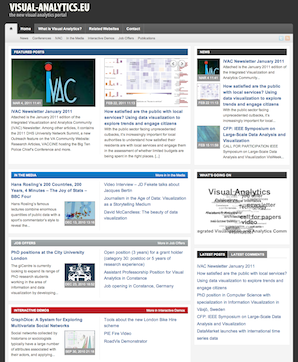
VisMaster.eu portal moves to Visual-Analytics.eu
As a follow-up to the VisMaster project we have created a new home for the VisMaster community on
http://www.visual-analytics.eu
Since the project is officially finished, we will keep the current website for archival purposes and all new content will be posted to the new website. This gives us the opportunity to extend the community beyond the partners of the EU Coordinated Action and to have exciting content generated by new contributors.
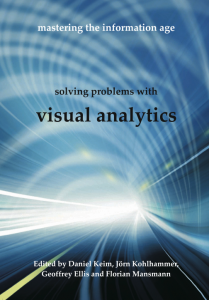 |
Mastering the Information AgeMastering The Information Age – Solving Problems with Visual Analytics The VisMaster book is now available in print form but you can also still download the full book from here [25 MB, PDF]. Go to the Book menu on the top bar for a summary of the book and individual chapters. |
Recent Posts
About VisMaster
VisMaster is an European Coordination Action Project focused on the research discipline of Visual Analytics: One of the most important challenges of the emerging Information Age is to effectively utilise the immense wealth of information and data acquired, computed and stored by modern information systems. On the one hand, the appropriate use of available information volumes offers large potential to realize technological progress and business success.
VisMaster CA: Das Rettungsfloß gegen die “Informationsüberflutung”